AI Search Visibility · Kelowna & the Okanagan

Does Your Business Show Up
When Someone Asks AI?

Getting found by ChatGPT, Google AI, Gemini and Perplexity

Does Your Business Show Up When Someone Asks AI?

Ask ChatGPT for a plumber in Kelowna, or a physiotherapist in West Kelowna, and it names three or four businesses. If yours isn't one of them, the customer never sees you. OmniMetrics makes Kelowna and Okanagan businesses visible and citable in AI search: the website structured so an AI can quote it, the Google Business Profile verified so an AI can trust it, and real photography so the business is unmistakably real. Same person, same phone number, 25 years in this market. It starts with a free check of how AI currently sees you.
1.2%
Of Local Businesses ChatGPT Recommends
<20%
Overlap Between Google's Top Results and What AI Cites
49%
Of Small Business Sites Invisible for Their Own Buyer Questions
1
Free Check to Find Out Where You Stand

2026 industry studies: Peak Advisers, Molo, Monic AI Systems. Your numbers will differ. That is what the check is for.

AI assistants answer the question. They don't send people to a list of links.

For twenty years, a search for "electrician near me" returned ten links and a map. The customer chose. Now a growing share of people ask an AI assistant instead: ChatGPT, Google's AI Overviews and AI Mode, Gemini, Perplexity, or the AI built into their phone. The assistant reads what it can find about local businesses, picks a few, and answers directly. Often it never shows a link at all.

That changes what "being found" means. Ranking on Google still matters, but the pages Google ranks and the sources AI assistants cite now overlap by less than a fifth. An AI decides who to recommend using different evidence: whether it can tell exactly what the business is and where it is, whether the website says things plainly enough to quote, whether the Google Business Profile is verified and consistent with everything else online, and whether there is proof a real business operates there.

A business can have a decent website and a fine Google ranking and still be invisible to AI, because nothing about it is structured in a way an AI can confidently repeat. That is the gap this page is about.
What AI search optimization actually is.

AI search optimization is the work of making a business easy for AI assistants to find, understand, trust and quote. The industry calls it generative engine optimization (GEO) or answer engine optimization (AEO). Both mean the same thing for a local business: when someone asks an AI for a recommendation in your category and your area, the AI has enough clear, consistent, verifiable information to name you.

It has four parts, and every one of them has a plain-English meaning:

  • Entity clarity: the AI can state exactly what your business is, what it does and where it is, with no contradictions between your website, your Google profile and the directories
  • Quotable content: your pages answer real questions directly, in complete sentences, under headings that read like the question, so an assistant can lift the answer whole
  • Structured data: code behind the page (schema markup, and a file called llms.txt) that tells machines the same facts in a format they read without guessing
  • Proof of a real business: a verified Google Business Profile, genuine reviews, consistent listings, and real photographs of the actual place and people. Trust signals an AI cannot fabricate and increasingly weights

None of this replaces search engine optimization. Good structure, fast pages and clear content are what make a page both rankable on Google and quotable by an AI. There is no separate switch for ChatGPT. There is a standard of clarity that most local websites do not meet.

One story, not two services.

Everything OmniMetrics already does for Kelowna businesses (a hand-coded site, a verified Google profile, real photography, monthly attention) is exactly the evidence AI assistants look for. The AI layer makes that evidence machine-readable. Here is what happens, in order.

1

Step 1: Check How AI Sees You Now

  • Ask the major assistants the questions your customers ask, in your category and your area, and record who they name
  • Read your site the way an AI does: can it tell what you are, where you are, and who you serve without guessing?
  • Check the Google Business Profile, the directories and the photos for contradictions and gaps. You get a plain written summary. This part is free
2

Step 2: Make the Business Unmistakable

  • One name, one address, one phone number, one description, identical on the site, the Google profile, Apple Business Connect and every directory that matters
  • Google Business Profile verified, correctly categorized, and complete. Unverified profiles are weak evidence to an AI
  • LocalBusiness schema on every page carrying the same facts, so machines read them without interpretation
3

Step 3: Structure the Site So It Can Be Quoted

  • Every service page opens by saying what the business is, where it works and who it serves, within the first hundred words
  • Headings phrased as the questions customers ask, with a direct answer under each. An FAQ on every service page, marked up so machines recognize it
  • An llms.txt file: a short plain-text briefing at your web address that gives AI tools a clean summary of the business and the pages that matter. What llms.txt is and whether you need one
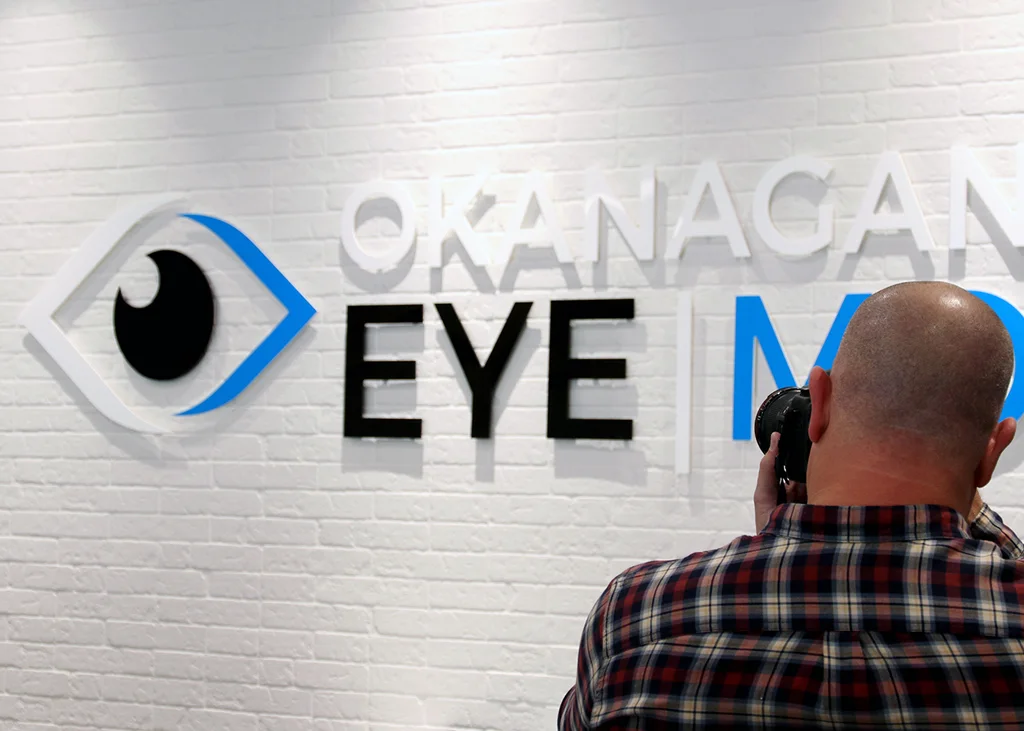
4 Photographing a Kelowna business for its Google Business Profile

Step 4: Add the Proof AI Can't Fake

  • Real photographs of the actual location, team and work, on the site and the Google profile. Stock and AI-generated images are increasingly treated as a credibility gap
  • A working system for genuine Google reviews, and responses to every one
  • Consistent citations across the directories AI assistants read. This is the local visibility and photography work, pointed at a second audience
5

Step 5: Keep It Current

  • AI assistants re-read the web constantly. Stale hours, an old address or last year's photos get repeated as fact
  • Re-run the same customer questions each month and record who gets named, so you can see movement in plain terms
  • This is what Monthly Digital Management is for. One person who knows the whole picture, adjusting what needs adjusting

Want to know how AI currently sees your business? I'll ask the assistants what your customers ask, read your site the way they do, and send you a plain written summary. Free, no obligation.
Get my free AI visibility check

Straight answers about AI search.

How do I know if my business shows up when people ask ChatGPT for recommendations?

Ask it the way a customer would: "best [your category] in Kelowna" or "who should I call for [your service] in West Kelowna". Do the same in Google's AI Mode, Gemini and Perplexity. If your business is not named, or is named with wrong details, you are not visible. OmniMetrics runs this check across the major assistants for free and sends you the results in writing.

What is generative engine optimization?

Generative engine optimization (GEO) is the practice of making a business easy for AI assistants to find, understand, trust and quote when they generate an answer. For a local business it means clear and consistent business facts everywhere online, pages that answer real questions directly, structured data behind the pages, and proof that a real business operates at the address. Answer engine optimization (AEO) is another name for the same work.

Is this different from regular SEO?

It is the same foundation pointed at a second audience. Google ranks pages; an AI assistant quotes them. Fast pages, clear structure and factual content serve both. The differences are emphasis: AI assistants weight entity clarity, direct answers, structured data and real-world proof more heavily than link-based ranking signals. A site can rank on Google and still be invisible to AI if nothing on it is stated plainly enough to repeat.

Does my Google Business Profile matter for AI search?

Yes, and more than most people expect. AI assistants lean on the Google Business Profile as a verified record of what the business is, where it is, its hours, its reviews and its photos. An unverified, incomplete or inconsistent profile is weak evidence, and the assistant will favour a competitor whose profile is complete. Getting the profile verified correctly is the first thing to fix.

Do real photos really make a difference to an AI?

They are one of the few signals an AI cannot fabricate and increasingly treats as evidence of a real, operating business. Original photographs of the actual location, team and work, on the website and the Google profile, distinguish a business from the growing volume of AI-generated pages with stock imagery. Text can be written by anyone. A photo of your shop on Pandosy Street cannot.

How long does it take to see results?

Corrections to business facts and the Google profile are usually picked up within weeks, because assistants re-read those sources often. Structural changes to the website take longer to be re-crawled and trusted, typically one to three months. There is no guaranteed timeline and anyone promising one is guessing. What you can have is a monthly record of the same questions asked the same way, so movement is visible.

What does OmniMetrics do differently?

Most agencies sell AI optimization as a technical add-on to SEO. OmniMetrics already builds the three things AI assistants look for: a hand-coded site with clear structure, a verified and managed Google Business Profile, and real on-location photography. The AI layer (entity clarity, structured data, llms.txt, answer-first content) makes that existing evidence machine-readable. One person does all of it, in Kelowna, and you can phone him.

Kelowna, West Kelowna, Lake Country, Peachland, Vernon and Penticton.

AI assistants answer local questions locally. "Best physio in Kelowna" and "best physio in West Kelowna" produce different answers, and a business that serves both has to be legible for both. OmniMetrics works with businesses in Kelowna, West Kelowna, Lake Country and Peachland, and up and down the valley in Vernon and Penticton. Photography is on location wherever the business is, so the proof is real for the address on the profile.

This is not a new-service experiment. It is the same website, Google profile and photography work OmniMetrics has done for Kelowna businesses for 25 years, applied to the way people now search.

Read more first? What is llms.txt? explains the briefing file in plain English. AI Content & SEO: What Happens Next? covers why real proof matters more as AI-written pages multiply.
 

Would you like to meet?

  •   281 Rialto Dr Kelowna BC V1V 1E9
  •  

Sociable?

What this is.

  • Website development, managed hosting, brand photography, and local visibility for Kelowna and Okanagan businesses. 25 years in this market. Direct access, you work with me, not a coordinator.

 
1999 - 2026© OmniMetrics
Marketing Made Simple. ::     WS Terms | Policies | Credits